类型
恒星类型
恒星的类型
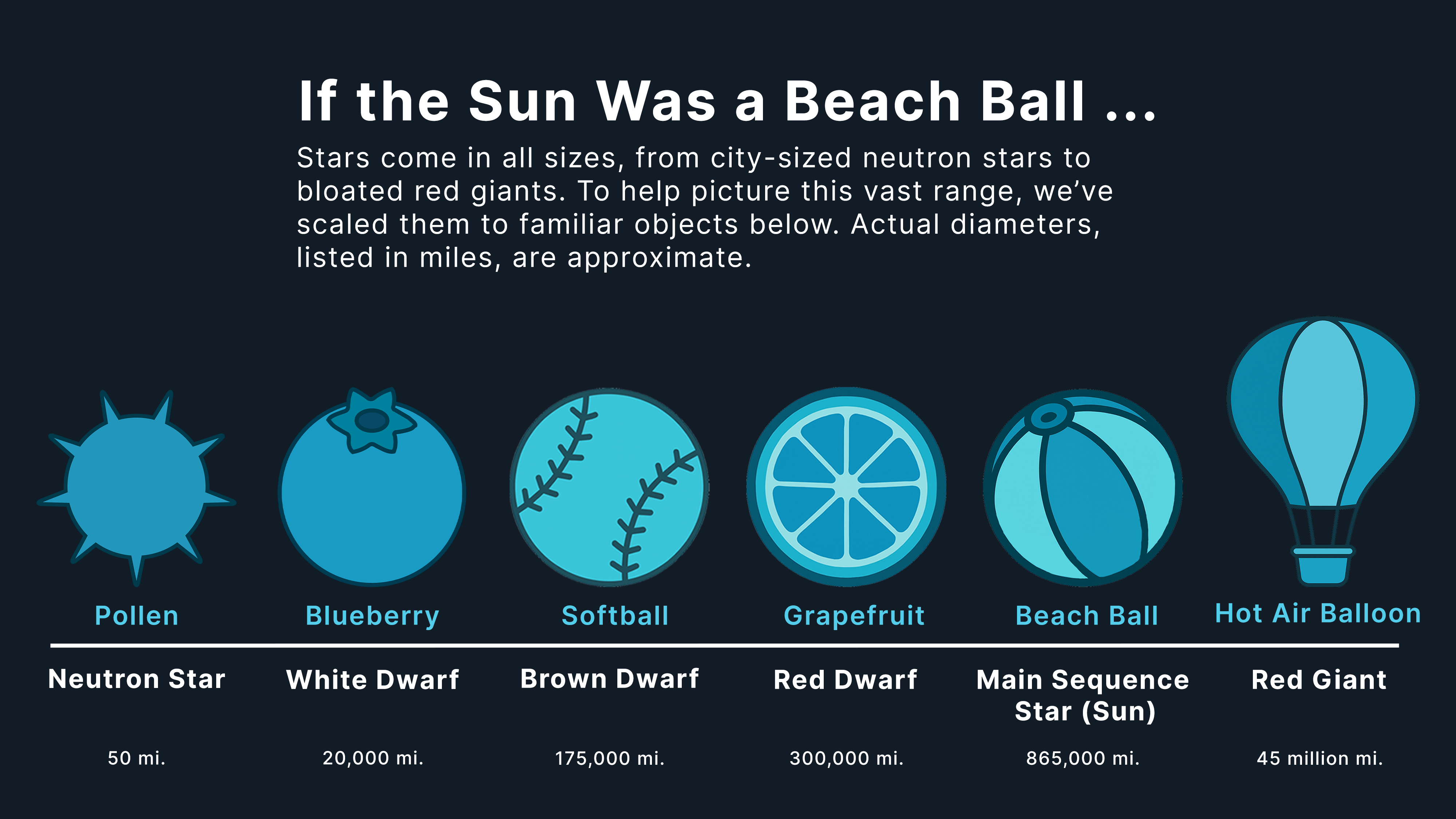
宇宙中的恒星在亮度、大小、颜色和行为上各不相同。有些类型会很快变成另一种类型,而另一些则在数万亿年里几乎保持不变。
主序星

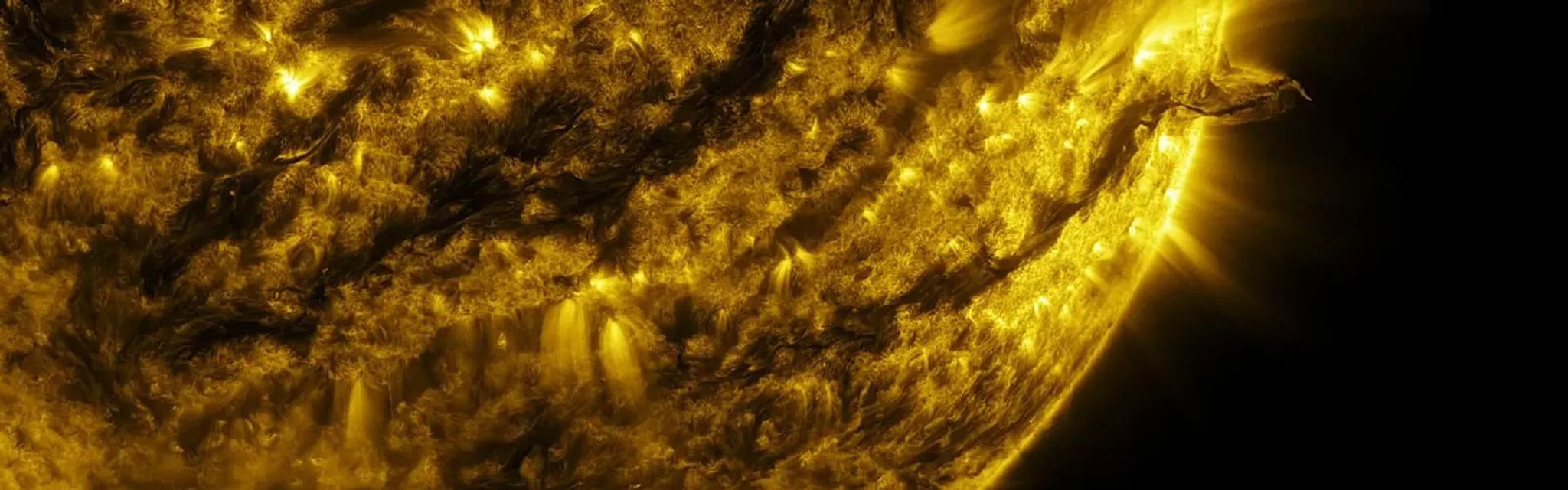
一颗普通恒星诞生于恒星孕育场中的一团尘埃和气体。在数十万年的时间里,这团物质不断增加质量,开始旋转并升温。当它的核心升温到数百万度时,核聚变就开始了。这一过程发生在两个质子——氢原子核——合并形成一个氦原子核时。聚变释放出的能量加热恒星,产生向外的压力,抵抗引力的向内拉拽。一颗恒星就此诞生。科学家把核心正在把氢聚变成氦的恒星称为主序星。主序星约占宇宙恒星总数的90%。它们的亮度
For Stargazers: Many main sequence stars can be seen with the unaided eye, such as Sirius – the brightest star in the night sky – in the northern constellation Canis Major. Rigil Kentaurus (better known as Alpha Centauri) in the southern constellation Centaurus is the closest main sequence star that can be seen with the unaided eye.
Red Giants
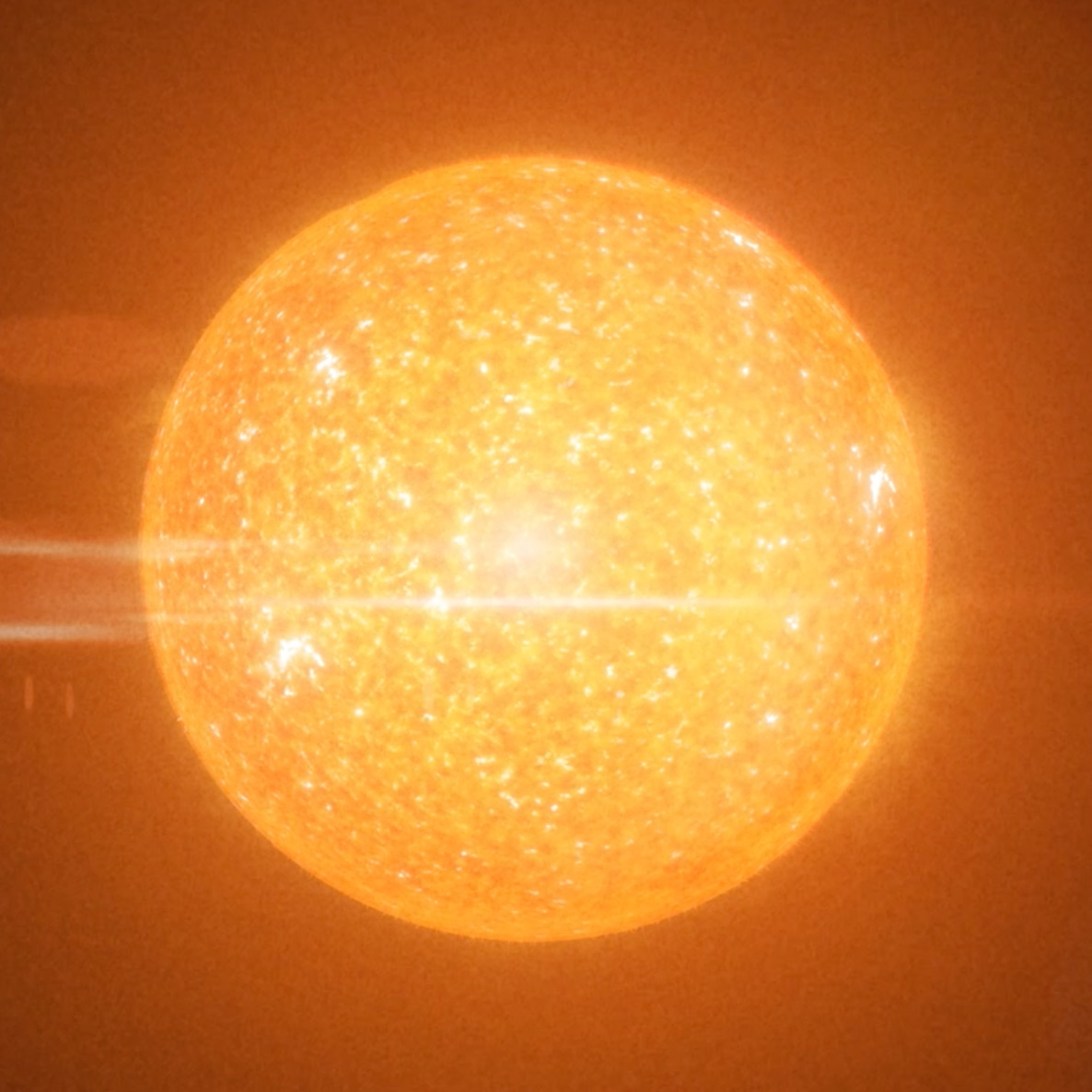
When a main sequence star less than eight times the Sun’s mass runs out of hydrogen in its core, it starts to collapse because the energy produced by fusion is the only force fighting gravity’s tendency to pull matter together. But squeezing the core also increases its temperature and pressure, so much so that its helium starts to fuse into carbon, which also releases energy. Hydrogen fusion begins moving into the star’s outer layers, causing them to expand. The result is a red giant, which would appear more orange than red. Eventually, the red giant becomes unstable and begins pulsating, periodically expanding and ejecting some of its atmosphere. Eventually, all of its outer layers blow away, creating an expanding cloud of dust and gas called a planetary nebula. The Sun will become a red giant in about 5 billion years.
For Stargazers: Arcturus in the northern constellation Boötes and Gamma Crucis in the southern constellation Crux (the Southern Cross) are red giants visible to the unaided eye.
白矮星
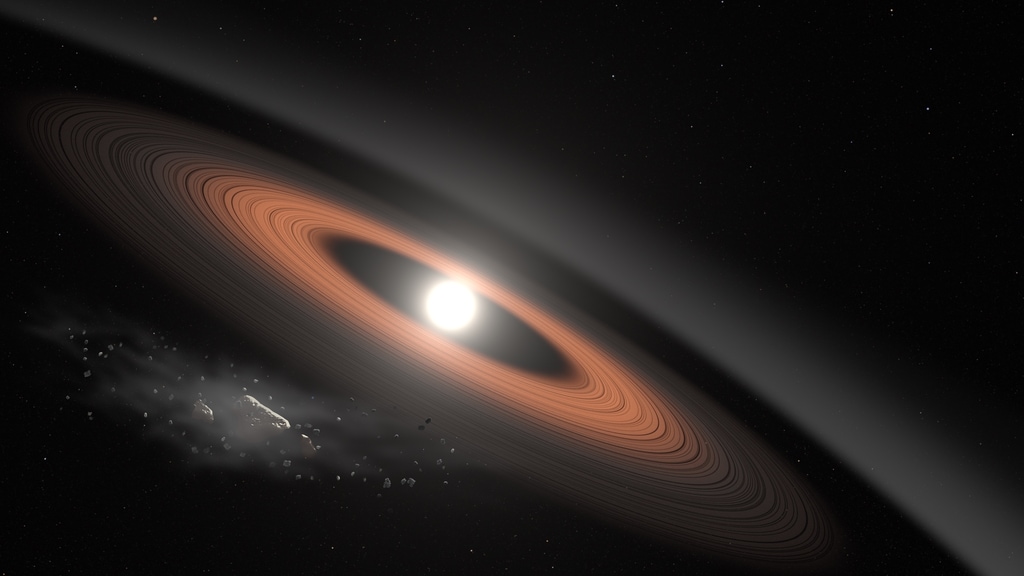
当红巨星抛掉它所有的外层大气后,只剩下核心。科学家把这种恒星遗迹称为白矮星。白矮星通常只有地球那么大,但质量却是地球的数十万倍。它的一茶匙物质就比一辆皮卡车还重。白矮星自身不再产生新的热量,因此会在数十亿年里逐渐冷却。尽管名字里有“白”字,白矮星发出的可见光却可以从蓝白色一直到红色。科学家有时会发现,白矮星周围环绕着由物质、碎片甚至行星组成的尘埃盘——这些是原来那颗恒星在红巨星阶段留下的残余物。大约 100 亿年后,太阳在经历红巨星阶段之后,也会变成一颗白矮星。
观星小贴士:白矮星太暗淡,肉眼看不到,不过有些白矮星位于双星系统中,可以和一颗容易看到的主序星一起被找到。南河三 B 就是北天小犬座中的一个例子。如果你家里有望远镜,还可以看到南天苍蝇座中孤独的白矮星 LP 145-141,以及北天双鱼座中的范玛宁星。
中子星
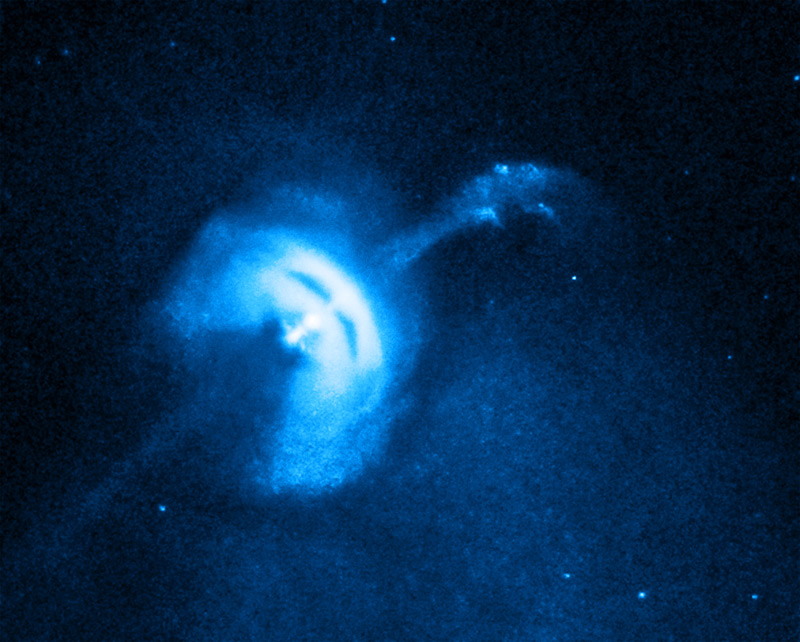
中子星是恒星遗迹,它把比太阳还大的质量压缩进一个大约和纽约市曼哈顿岛长度相当的球体中。
当一颗质量约为太阳 8 到 20 倍的主序星核心中的氢耗尽时,就会形成中子星。(更重的恒星会形成恒星级黑洞。)这颗恒星会像质量更低的恒星一样,开始把氦聚变成碳。但随后,当核心中的氦耗尽时,它会收缩、升温,并开始把碳转化成氖,同时释放能量。这个过程会继续进行:恒星把氖转化成氧,把氧转化成硅,最后
Pulsars: These are a type of rapidly rotating neutron star. Bright X-ray hot spots form on the surfaces of these objects. As they rotate, the spots spin in and out of view like the beams of a lighthouse. Some pulsars spin faster than blender blades.
Magnetars: All neutron stars have strong magnetic fields. But a magnetar’s can be 10 trillion times stronger than a refrigerator magnet’s and up to a thousand times stronger than a typical neutron star’s.
For Stargazers: Neutron stars are too faint to see with the unaided eye or backyard telescopes, although the Hubble Space Telescope has been able to capture a few in visible light. Astronomers usually observe them via X-rays and radio emission.
红矮星
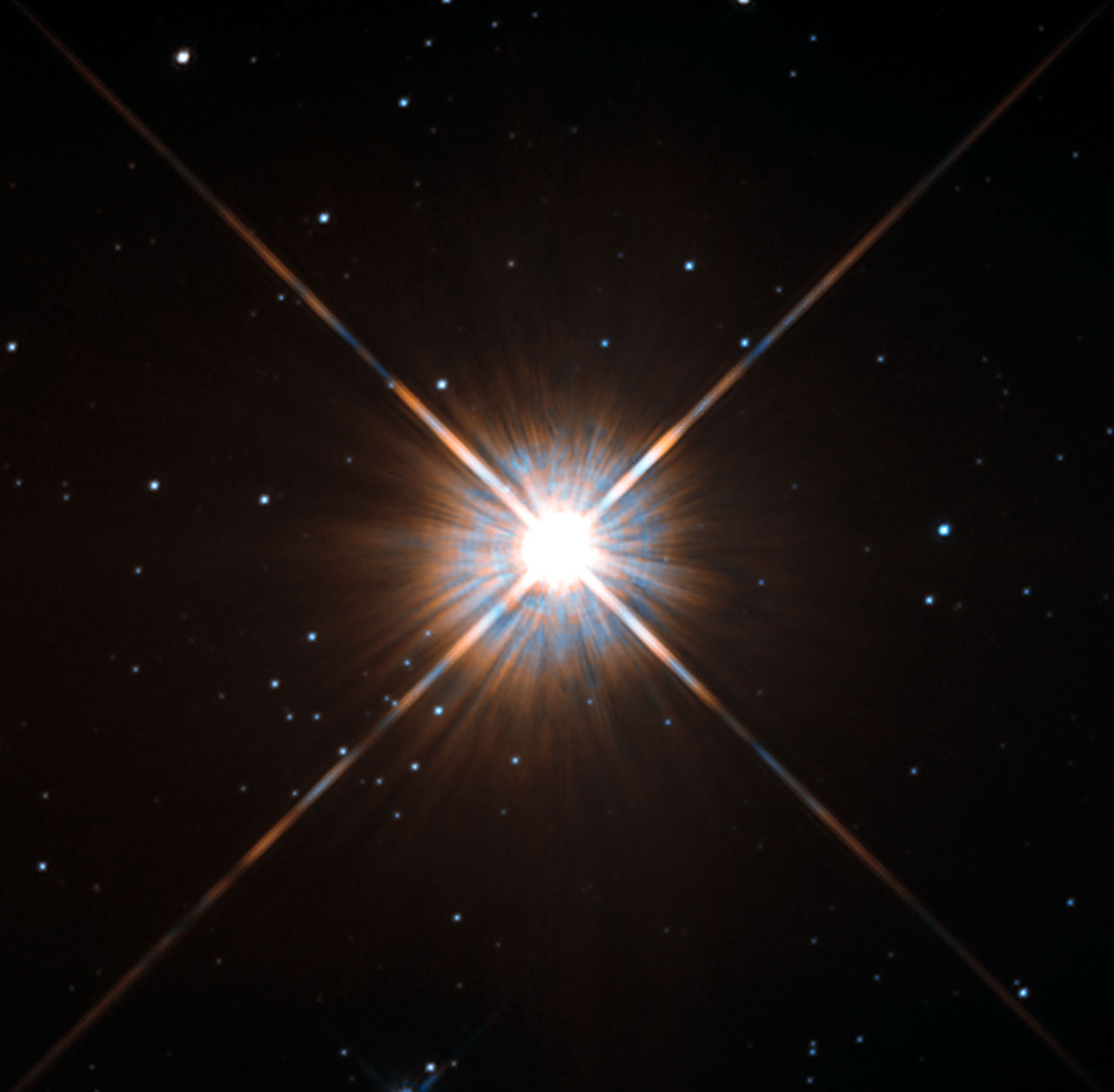
红矮星是最小的主序星——只有太阳大小和质量的几分之一。它们也是最冷的,颜色看起来更偏橙色而不是红色。当红矮星在其核心通过聚变产生氦时,释放的能量将物质带到恒星表面,在那里冷却并沉回,同时将新鲜的氢供应带到核心。由于这种不断的翻腾,红矮星可以在数万亿年里稳定地燃烧掉其全部的氢供应,而不会像其他恒星那样改变其内部结构。科学家认为,一些低质量红矮星,那些只有太阳质量三分之一的红矮星,其寿命比宇宙当前年龄还要长,可达约14万亿年。红矮星的诞生数量也比更大质量的恒星多得多。因此,由于它们寿命如此之长,红矮星约占银河系恒星总数的75%。
致观星者:红矮星太暗,肉眼无法看到。但用后院望远镜,你也许能看到南天星座显微镜座中的拉卡伊8760或北天星座大熊座中的拉朗德21185。
褐矮星
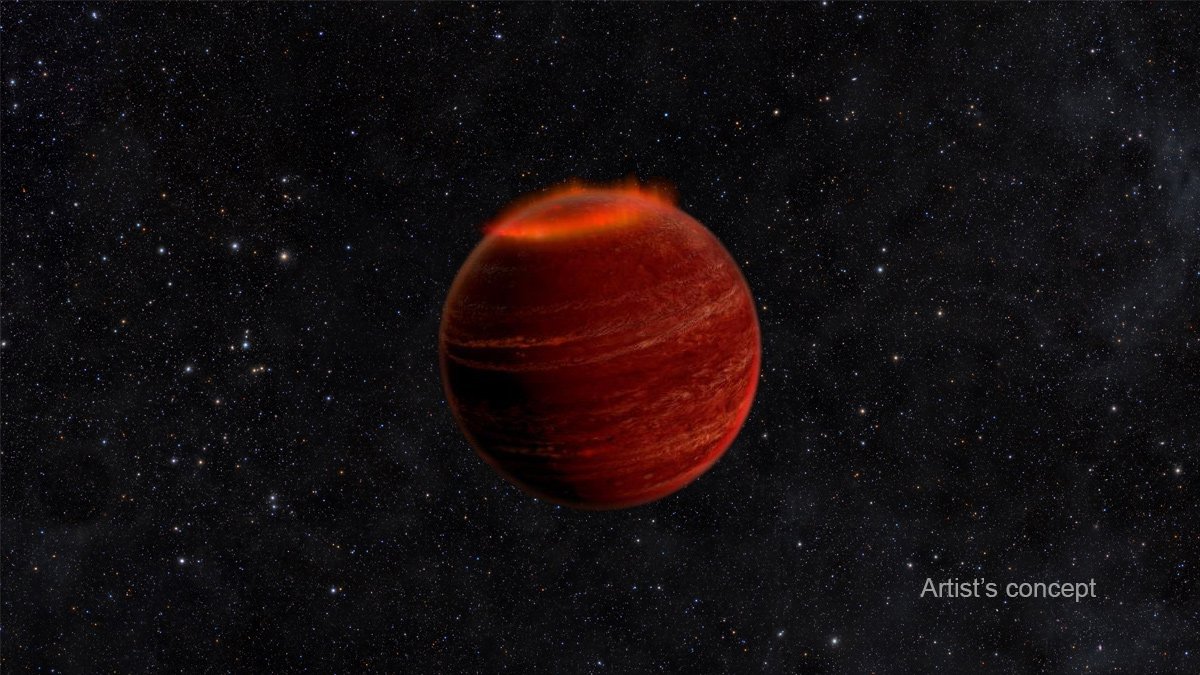
严格来说,褐矮星不是恒星。它们比行星质量大,但不如恒星质量大。通常,它们的质量是木星的13到80倍。它们几乎不发出可见光,但科学家已在红外线下看到了一些。一些褐矮星与主序星的形成方式相同,来自星云中的气体和尘埃团块,但它们从未获得足够的质量来进行主序星规模的聚变。其他的可能像行星一样,从恒星周围的气体和尘埃盘中形成。
致观星者:褐矮星对肉眼和后院望远镜都是不可见的。
通过后院世界:行星9参与NASA科学!
- 想帮助发现一个新世界吗?后院世界:行星9公民科学项目邀请志愿者帮助科学家在海王星之外的领域搜索新的褐矮星和行星。 Join the search today