多星系统
多星系统
多星系统
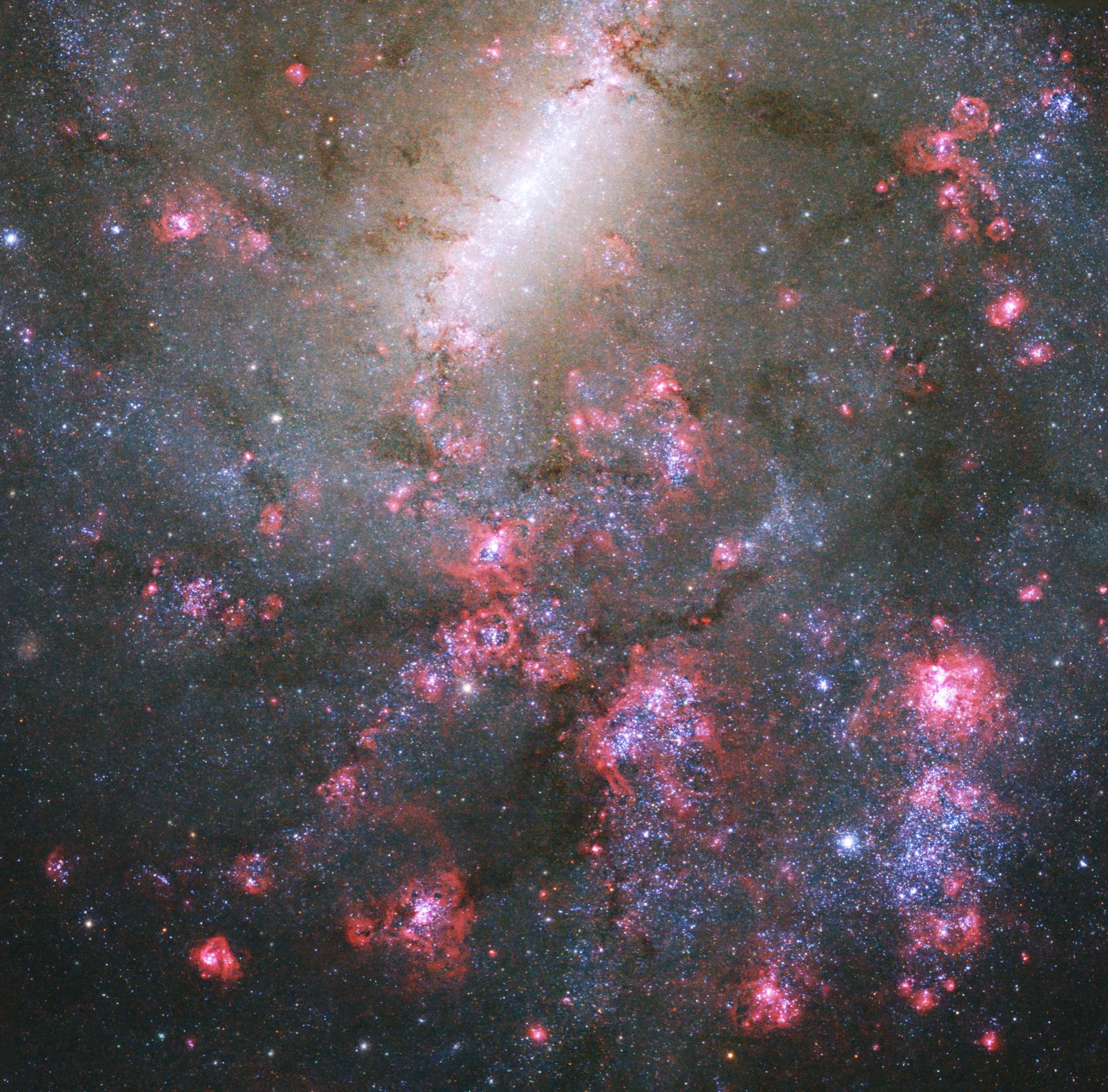
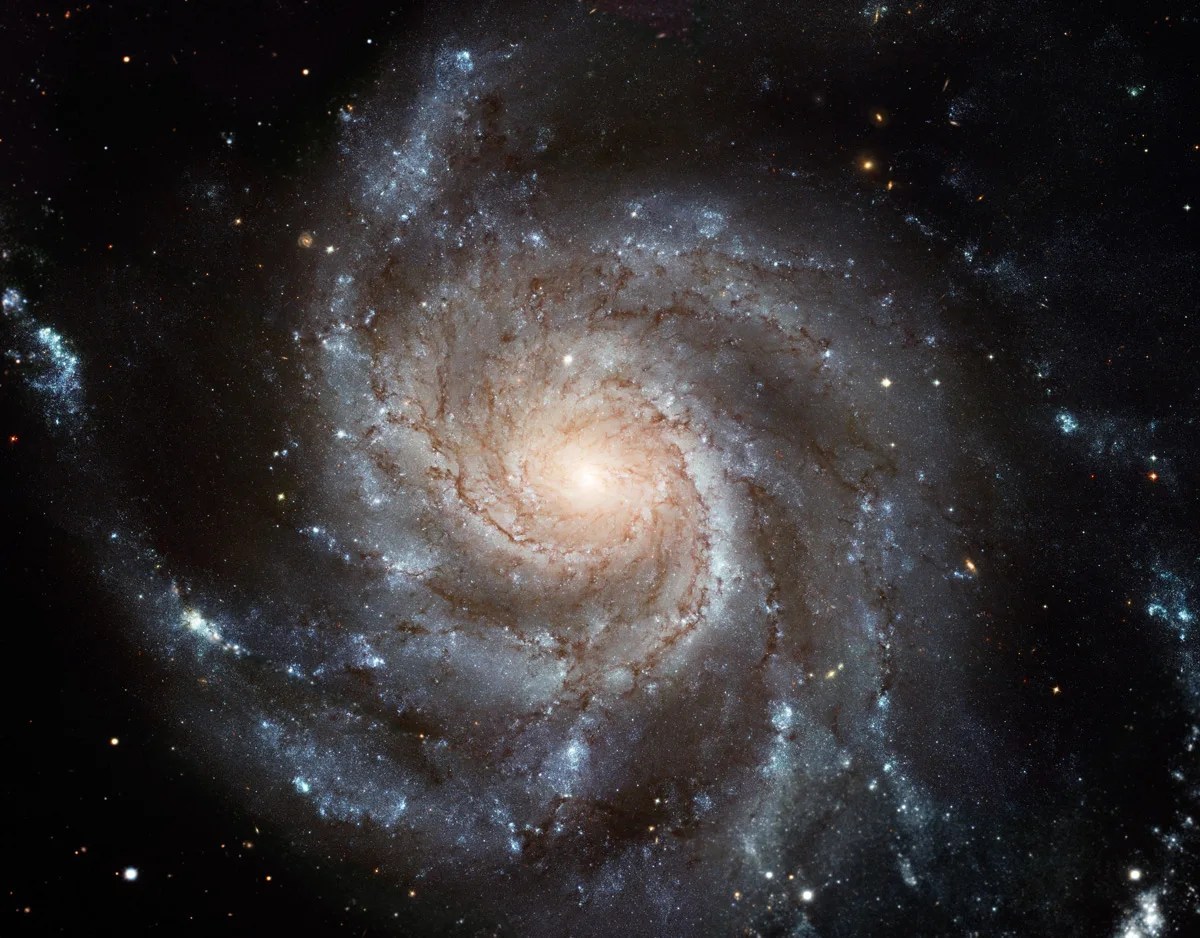
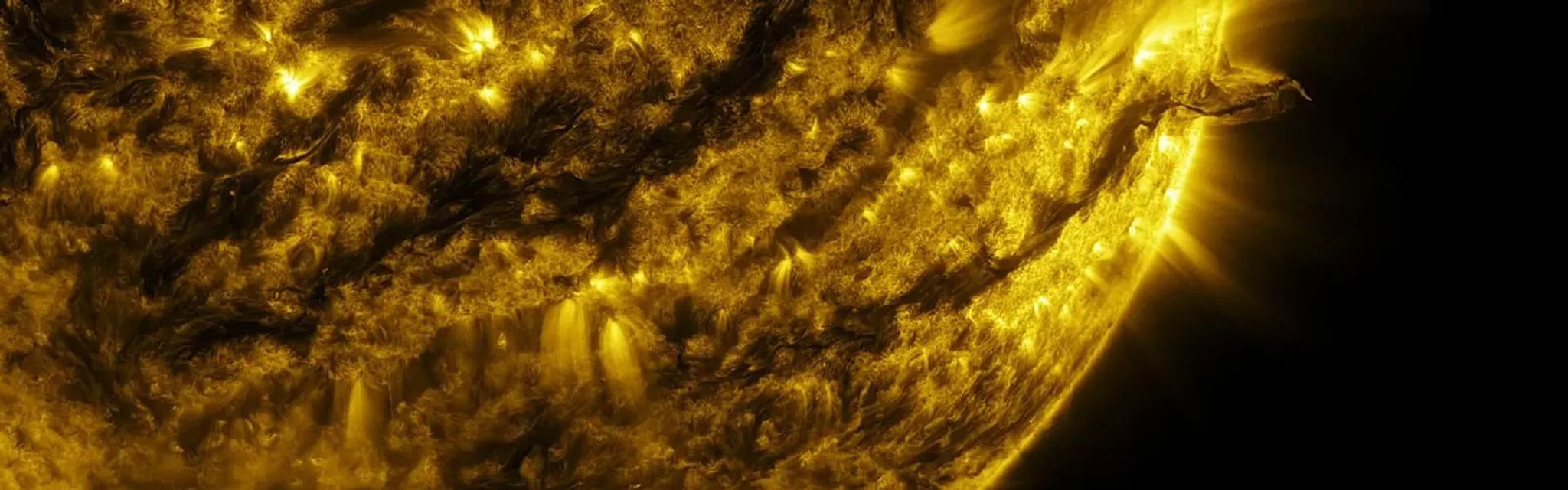
我们的太阳系有八颗行星围绕着一颗孤独的太阳运行,这让我们感到很熟悉,因为我们就生活在这里。但在广阔的星系中,像我们这样的行星系统其实只占少数。天空中超过一半的恒星都有一颗或多颗伙伴星。这些多星系统有着令人惊叹的多样性:又大又热的恒星被更小、更冷的恒星环绕;双星被行星环绕;一对恒星在 X 射线中脉动,因为其中一颗抛出的物质被另一颗吞噬;有的系统甚至有七颗恒星在复杂的引力之舞中相互绕转。让我们来做一次简短的巡游吧。
NASA’s Goddard Space Flight Center/Chris Smith (USRA)
双星
双星系统中展现出的多样性,几乎和整个星系的恒星族群一样丰富。这些恒星对在质量上可能相差很大,比如说,一颗像我们太阳这样的中等大小的黄色恒星,与一颗小得多、冷得多的红矮星锁定在轨道拥抱中。有些双星伙伴会迅速演化成红巨星或超巨星,而
NASA’s Goddard Space Flight Center/Chris Smith (USRA/GESTAR)
X-ray Binaries
Bizarre pairs known as X-ray binaries can exchange material between stars. A larger, more quickly evolving star can run out of nuclear fuel, explode in a supernova, and leave behind a far denser white dwarf, neutron star, or black hole. The collapsed star’s more powerful gravity can begin to drain away material from the companion star if it orbits closely enough. That process produces X-rays as the material falling onto the collapsed star is heated to more than 1.8 million degrees Fahrenheit (1 million degrees Celsius). X-ray binaries, including those that eclipse, can provide valuable data that help scientists understand extreme physical phenomena including the lighthouse-like pulses emitted by spinning neutron stars, thermonuclear blasts ignited in the fallen gas, and dips in starlight that reveal the presence of intervening material forming an accretion disk around the orbiting stars.
Other Multiples
Some multiple star systems include three stars or more, their orbits intricately intertwined by gravity. As many as seven stars have been observed in a single system.
Like binaries, triple-star systems can host planets. For example, our nearest stellar neighbor, the Alpha Centauri system, includes three stars. The outermost, Proxima Centauri, is known to host at least one planet. Another three-star system, HD 131399, includes a giant gas planet four times the mass of Jupiter in orbit around its central star, while two more stars appear to orbit both at a much greater distance.
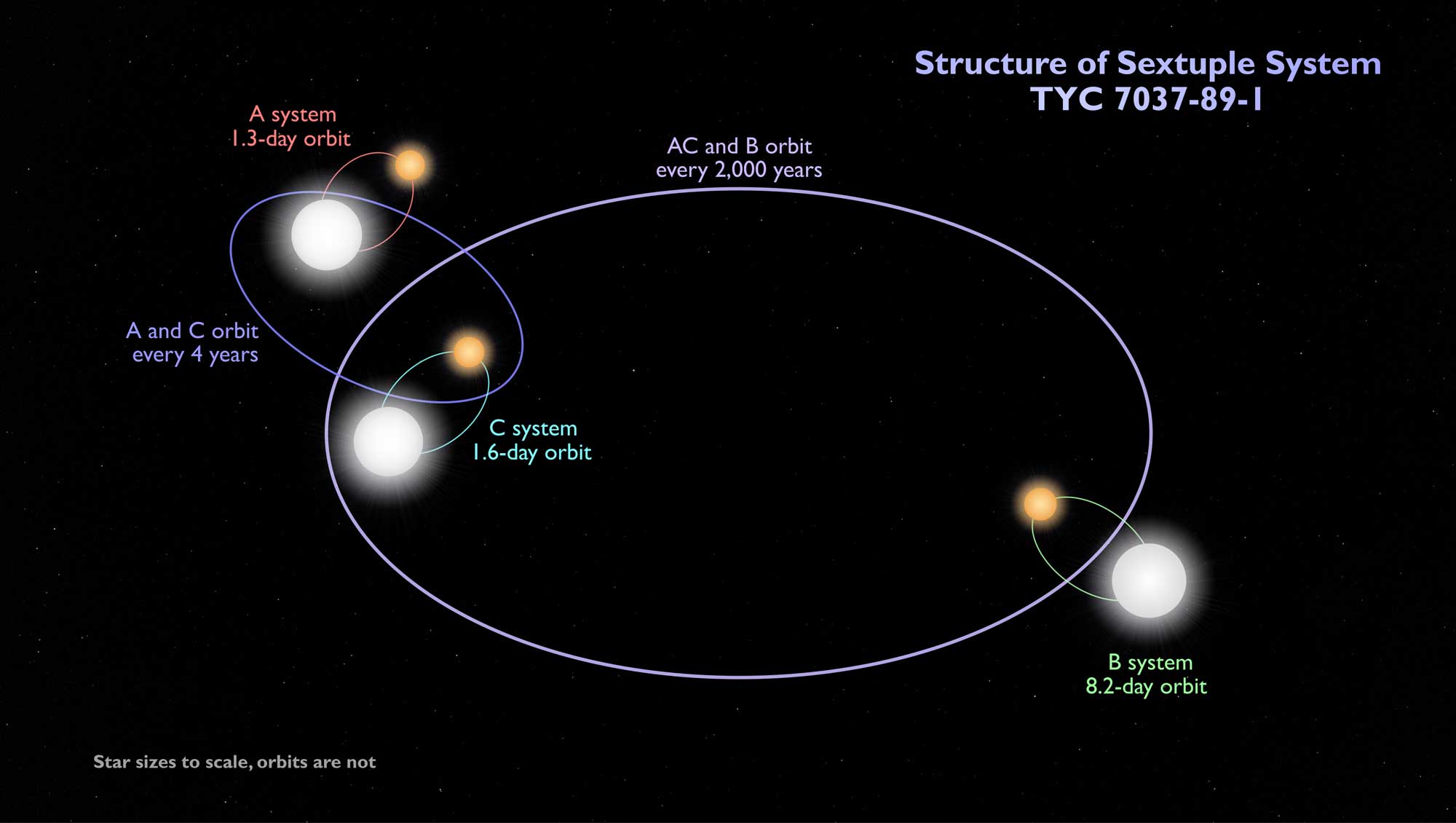
最近发现的一个壮观的六合星系统 TYC 7037-89-1,其引力复杂性堪比鲁布·戈德堡机械。三对独立的恒星各自以典型的双星方式相互绕转。但其中两对双星还会彼此绕转。第三对双星距离更远,绕着另外两对双星运行——从我们的视角看,每个双星系统中的恒星会依次相互遮掩。